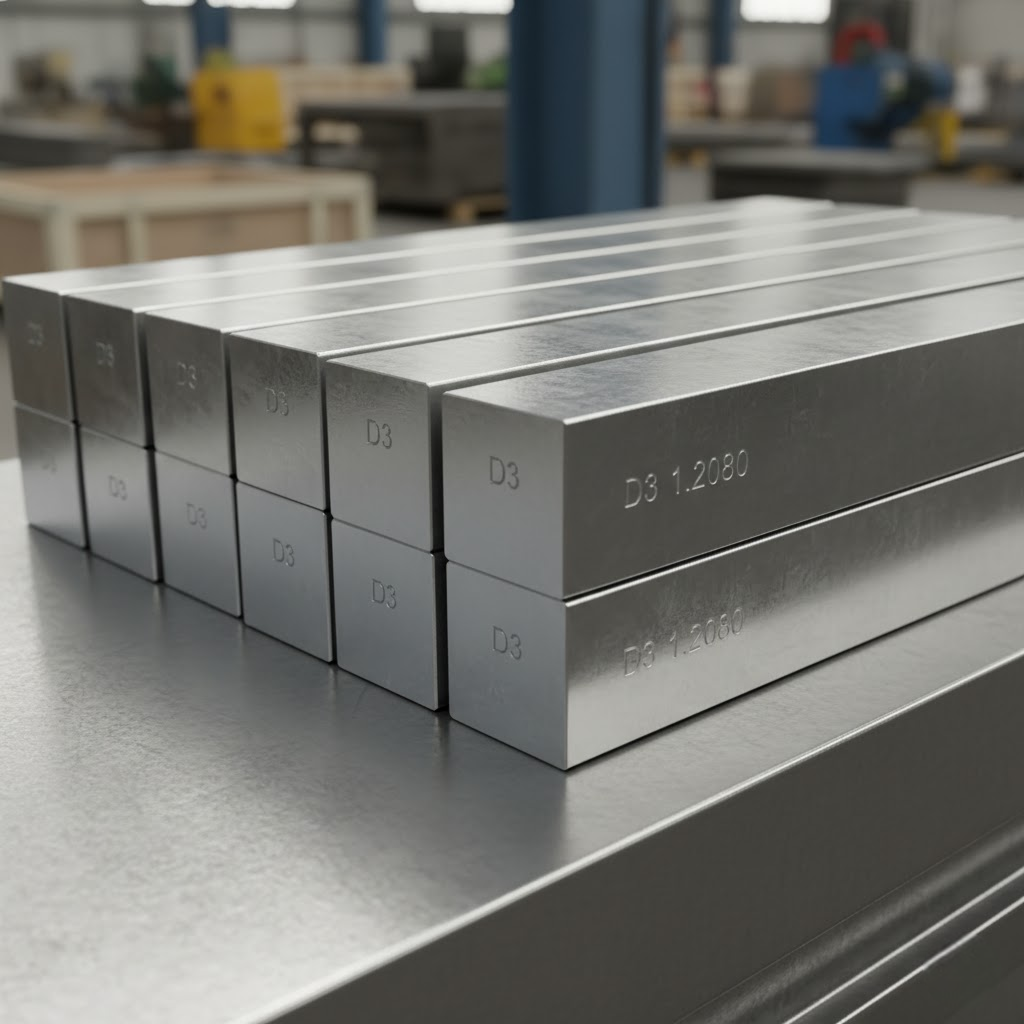
D3 tool steel (1.2080) is a high carbon, high chromium cold work steel designed for long run tooling and heavy duty applications. Its superior wear resistance, dimensional stability, and high compressive strength make it ideal for abrasive and high volume operations.
Key Advantages & Applications
- Exceptional wear resistance for abrasive tooling operations
- Maintains dimensional stability during hardening and use
- Suitable for blanking, forming, and drawing dies
- Ideal for slitting, shear blades, press tools, and punch tools
- Perfect for cold-work tooling where precision and long wear life are critical
This tool steel material maintains precision and hardness during repeated hardening cycles. Part of our comprehensive ferrous metals selection, we act as trusted D3 tool steel distributors, supplying D3 steel to clients in Dubai, Abu Dhabi, Sharjah, Riyadh, Dammam, Salalah and Muscat. The steel is ready for machining or heat treatment to meet demanding project requirements.